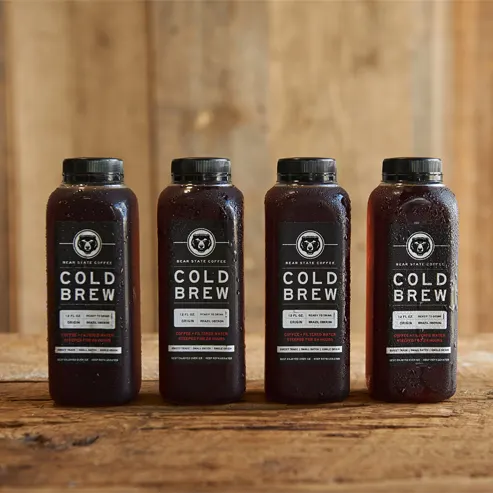
This spring we bottled our first single-origin cold brew. People keep asking what is in it, which is a fair question and has a very short answer.
Coffee and filtered water. That is the list.
No sugar, no dairy, no “natural flavours,” no preservative, no stabiliser, nothing to correct for something else being wrong. There is nowhere to hide in a two-ingredient drink, which is the entire reason we make it that way and also the reason it took as long as it did to get right.
Why cold, and why so long
Hot water extracts coffee quickly; cold water takes much longer. The temperatures produce different cups, but not because one neatly takes the good compounds and leaves every harsh one behind. Grind, ratio, roast, time and filtration still matter.
In our batches, the colder, longer method traded some aromatic lift for a rounder, chocolate-and-caramel profile. That is a sensory note, not medical advice and not a universal law of cold brew.
Twenty-four hours is the number because it was the production method we settled on after testing our coffee and equipment. It is a house method, not a chemistry constant. That distinction is worth keeping.
Doing it at home
It is genuinely difficult to get wrong, which is why we are happy to tell you exactly how.
Grind coarse — roughly French press territory, like rough sea salt. Weigh it. Combine with filtered water at 1:8 if you want a concentrate to cut later, or 1:15 to drink as it comes. Stir once so everything is wet. Cover it. Put it in the fridge, not on the counter — this matters, it is a food-safety point as much as a flavour one.
Twenty-four hours later, strain it through a paper filter. Not cheesecloth, which will let the fines through and leave you with something silty. Keep the brew at 40 °F / 4 °C or colder, use clean equipment, and discard it if its smell, fizz, appearance or container pressure seems wrong. A home recipe cannot honestly give every batch the same shelf life.
Over ice, in a glass, in July. For the current measured version, use the cold-brew ratio calculator. There is not much more to it than that, which was always the point.
Current safety references
- National Coffee Association — Cold Brew Safety GuideFood-safety planning and handling guidance for cold-brew coffee.
- U.S. Food and Drug Administration — Refrigerator ThermometersKeep a refrigerator at or below 40 °F / 4 °C.